

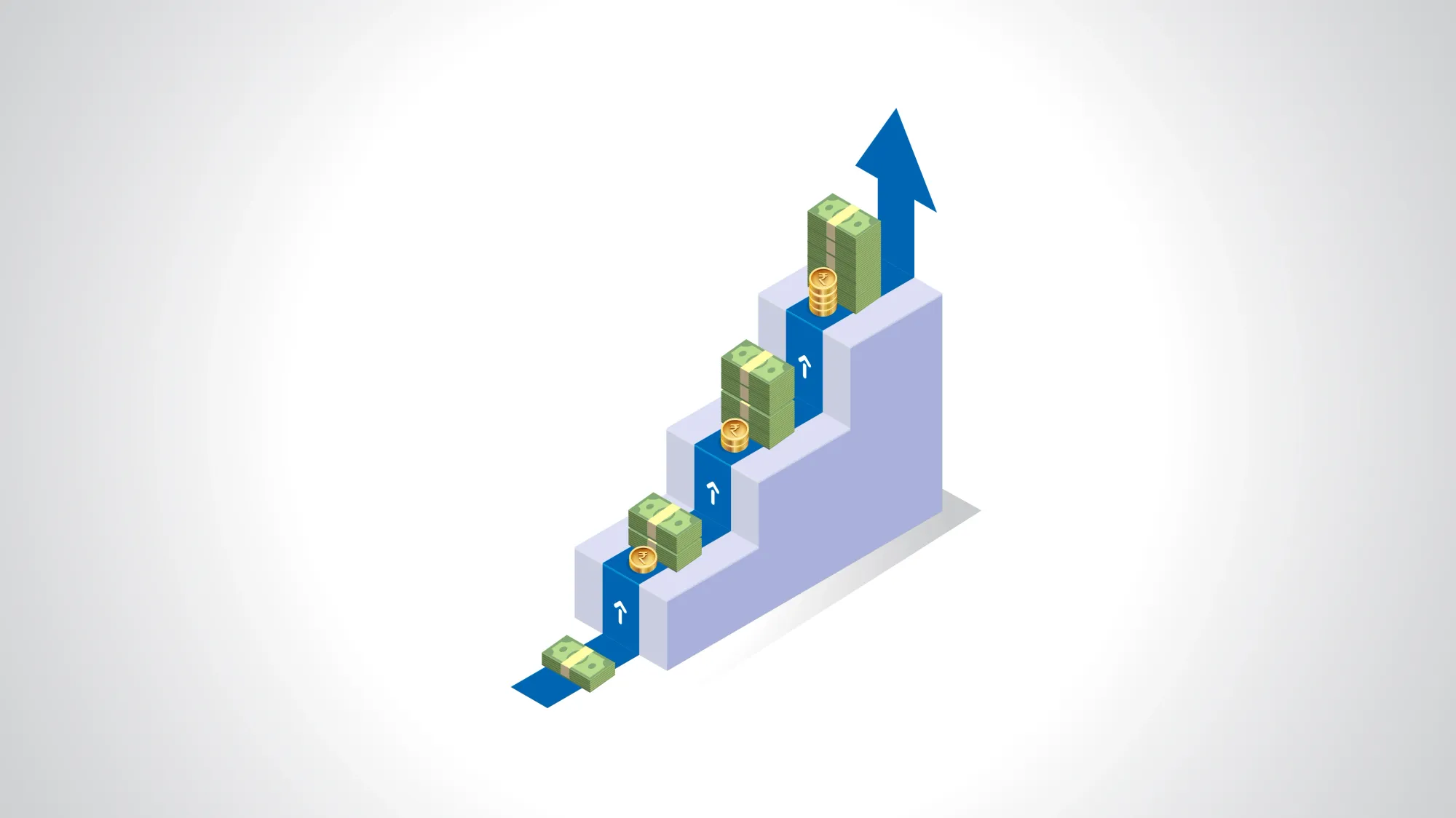
Most people think wealth is created by earning more money. But in reality, wealth is created by allowing money to grow for a long time. The process that makes this possible is compounding. Compounding means your money earns profit, and then that profit also starts earning profit. Over the years, growth stops depending on how much you invest and starts depending on how long you stay invested. This is why small amounts started early often beat large amounts started late.
Understanding Compounding in Simple Words
Imagine you save some money and it grows a little every year. Next year you do not earn only on the original amount but also on the previous growth. Slowly the increase becomes faster even if you are not adding large new amounts. In the beginning progress feels slow, almost invisible. After some years, the growth suddenly looks surprising. Nothing magical happened suddenly. Time was quietly multiplying your past patience.
Example of Early Starter
Rahul starts saving a small fixed amount every month from his first job in his early twenties. The amount feels tiny and results look unimportant in the first few years. But he continues regularly. By his mid-thirties, the growth of previous years becomes larger than his new contributions. By his forties, most of the money in his account comes from accumulated growth rather than fresh savings.
Example of Late Starter
Amit starts much later but invests a bigger amount because his salary is higher. For many years he contributes more money than Rahul. Still, he struggles to match Rahul’s final total because he lost the most powerful factor, time. Compounding rewards duration more than intensity. Starting early reduces pressure later.
Why People Miss Compounding
People expect quick visible results. When they do not see rapid growth in the first year, they stop investing or keep changing methods. Compounding needs consistency more than intelligence. Frequent stopping resets progress again and again. The biggest enemy of compounding is impatience, not market fluctuation.
Effect of Interruptions
Withdrawing money early damages long-term growth heavily. The later years of compounding produce the maximum increase. Removing money before that stage removes the most powerful part of the journey. Staying invested matters more than finding perfect timing.
Real Life Impact
Compounding does not only apply to investments. Skills, health habits, and savings discipline also grow the same way. Small daily improvements become large differences over years. Financial success usually looks sudden to others but is actually the result of long consistent behaviour.
How to Use Compounding Practically
Start with an amount you can maintain comfortably. Increase contributions gradually when income rises. Avoid frequent changes and give time for growth to work. Patience becomes the main strategy. The earlier you begin, the less pressure you feel in later years because the growth starts supporting you.
Final Thoughts
Compounding is slow at first and powerful later. Many people quit in the slow phase and miss the powerful phase. Wealth is rarely created by one big decision. It is created by many small decisions repeated without interruption. Time rewards consistency more than brilliance. The best moment to start was earlier, but the next best moment is today.